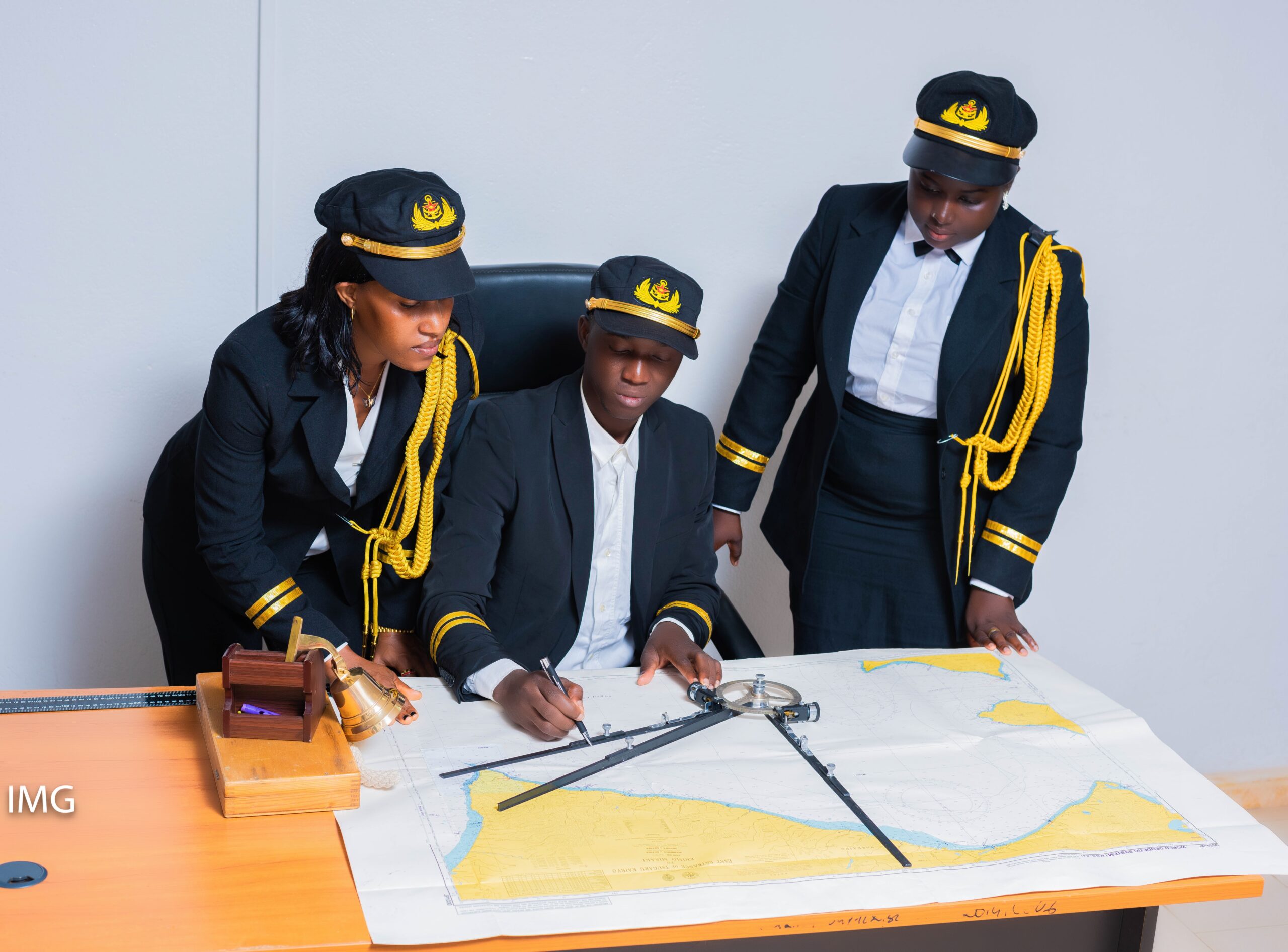
Bridging Theory and the Open Sea: The Strategic Synergy of Golden Marine
.Bridging Theory and the Open Sea: The Strategic Synergy of Golden Marine Engineering and the Institut Maritime de Guinée (IMG)
The maritime industry is undergoing an unprecedented evolution. From complex automation and advanced naval architecture to shifting international safety standards (such as COLREG, SOLAS, and MARPOL), the modern seafarer requires more than just traditional seafaring skills. Success today demands deep technical fluency, adaptive engineering capabilities, and rigorous operational safety.
Recognizing this shift, Golden Marine Engineering has forged a vital connection with the Institut Maritime de Guinée (IMG), located in Conakry (Matam Lido). This operational alignment bridges the gap between top-tier academic training and heavy industrial maritime applications, establishing a pipeline for the next generation of West African maritime leaders.
The Intersection of Academic Grounding and Field Precision
The Institut Maritime de Guinée has earned a distinct reputation for preparing forward-thinking maritime students across specialized faculties, including:
Nautical Sciences & Navigation Techniques
Marine Engineering & Naval Architecture
Maritime Logistics & Resource Management
While IMG provides the necessary mathematical, physics, and regulatory foundations—such as vessel stability principles, fluid mechanics, and instrumentation theory—Golden Marine Engineering provides the crucial arena for real-world application.
Through internship programs, technical mentorship, and practical training alignment, students transition seamlessly from classroom concepts to actual vessel environments.[IMG Classroom Theory] [Golden Marine Engineering Fields] • Archimedes & Hydrostatics ======> • Practical Ballast & Trim Management • Main Engine Diagnostics ======> • Hands-on Overhauls & Field Repairs • COLREG & Navigation Laws ======> • Bridge Operations & Emergency Drills
Transforming Trainees into Qualified Marine Engineers
For a maritime student or young trainee, there is no substitute for live technical environments. Golden Marine Engineering actively integrates selected IMG talent into real technical operations across regional shipping networks.
1. Real-World Engineering & Troubleshooting
At the repair berth or anchorage, trainees move beyond textbook diagrams. Under the supervision of senior engineers, they work directly on core propulsion components, auxiliary systems, and fuel filtration management. Learning how to troubleshoot a sudden mechanical issue—such as diagnosing a fuel filter restriction or adjusting speed parameters to manage engine stress—builds a practical resilience that cannot be simulated on a blackboard.
2. Applied Naval Architecture & Stability
Understanding the math behind the Metacentre ($M$), Gravity ($G$), and the Free Surface Effect is one thing; witnessing weight displacement during cargo handling or ballast adjustments on a bauxite transport vessel is another. Trainees learn how to calculate draft variations, manage trim, and safely balance a vessel’s center of gravity in real time, making ship stability second nature.
3. Rigorous Safety & Quality Inspections
By observing structural thickness gauging, non-destructive testing (NDT), and safety equipment overhauls executed by Golden Marine Engineering, future officers and engineers develop an uncompromising eye for compliance. They enter the industry understanding exactly what Port State Control looks for, lowering operational risks for future employers.
Shaping the Future Captains and Chief Engineers of West Africa
This collaborative mindset does more than simply enhance resumes; it directly fortifies the local maritime sector. As West African shipping routes expand—particularly within the dynamic bauxite and bulk logistics corridors connecting Conakry, Kamsar, and Moribayah—the demand for highly competent, locally grown officers has never been higher.
By backing academic excellence with rugged, hands-on field experience, Golden Marine Engineering and IMG ensure that tomorrow’s maritime professionals are fully equipped to command, maintain, and innovate.